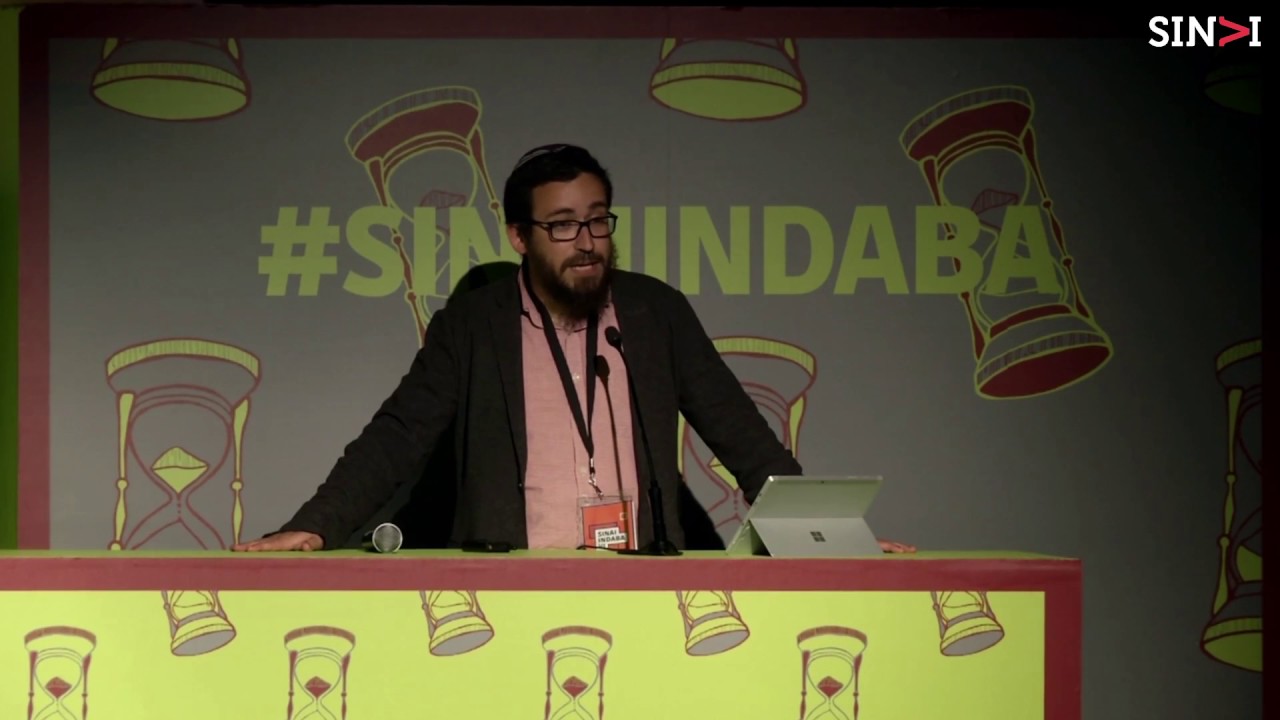
RSL uses the philosophical treatment of fiction to understand Chassidus (with an Izhbitzer focus).
To give my own example. Consider these three claims:
1- a unicorn has a horn
2- a unicorn breathes fire
What makes #1 more true than #2? Since there are no unicorns, in what sense is it true that a unicorn has a horn more so than it breathes fire? Neither of them describes reality. But within the story, the unicorn does have the horn.
Does Harry Potter have free will? Or does he do whatever J.K. Rowling writes he does? He is depicted as a person, so he has free will within the story. But in reality it is only within the story.
Which gets us to Izhbitz’s position on free will. Say “existence” is just something Hashem is imagining. We too only have free will from within His story.
An interesting take on מצדו ומצידנו.
Queue Rn Gila Atwood’s signature file from the early days of Avodah:
Mrs. Gila Atwood
We are pixels in G-d's imagination.
You are welcome to browse my website at:
http://www.bereshitsoftware.com/gila/main.html
a little Torah, nature, humour, environmental concerns and memoirs.
Later on, RSL uses this idea that both of the following is true:
The cellphone of the guy next to him in shul suddenly said “Where do you want to go today?”
This happened because:
1- he happened to hit the phone in a way that woke up Waze.
2- Hashem wanted to give me a message, and I need to explore what the message is.
Inside the story, #1 is true. But outside the story, #2 is true.
Revelation is the Author entering His own story. We live in a Post-Modern, break the Fourth Wall, kind of story.